by Moroccan Nomad Tours
Share
by Moroccan Nomad Tours
Share
Nomadic Paths & Wild Dunes – Sustainable Sahara Trekking in Erg Chigaga
Looking for a true desert escape far from crowds? Erg Chigaga trekking is one of Morocco’s most authentic experiences — a journey through nomadic paths, silent hammada plains, and the wild dunes of Erg Chigaga. This is not a quick “tourist stop” in the Sahara. It’s slow travel in the real desert, guided by locals who understand the land, the weather, and the rhythm of the Sahara.
In this guide, you’ll discover how sustainable Sahara trekking in Wild Erg Chigaga supports local communities, protects fragile desert ecosystems, and creates meaningful memories — with comfort, safety, and respect at the center of every step.
Why Trek in Wild Erg Chigaga?
Erg Chigaga is known for its remote location and untouched desert landscapes.
Unlike more visited dune areas, the wild Erg Chigaga region feels vast and peaceful, with endless horizons and deep silence at night. Trekking here is perfect for travelers who want a real connection with Morocco’s Sahara not mass tourism.
- Wild dunes and open desert space with fewer visitors
- Nomadic routes shaped by generations of desert life
- Incredible stargazing under clear Sahara skies
- Slow-paced trekking that lets you feel the desert, not rush it
What Sustainable Sahara Trekking Means in Erg Chigaga
The Sahara is beautiful, but it’s also fragile. Sustainable Sahara trekking means traveling in a way that reduces impact and creates benefits for local people. In Erg Chigaga trekking, sustainability is not a trend — it’s a responsibility.
1) Local Nomadic Knowledge
A sustainable trek begins with local guides and desert teams. Traveling with people born in the region helps protect traditional knowledge and ensures safer, more authentic routes through Wild Erg Chigaga.
2) Respect for Desert Nature
We follow a “leave no trace” approach: minimize waste, avoid fragile areas, and keep the desert clean for future travelers and local wildlife.
3) Community Support
Sustainable trekking supports local families through fair jobs (guides, cooks, camel handlers, drivers) and encourages responsible tourism that stays in the region.
Erg Chigaga Trekking Experience: What You’ll Live
Every trek is different, but the spirit is the same: walk the desert, follow nomadic tracks, and sleep under stars. On a typical Erg Chigaga trekking journey, you can expect:
- Walking across dunes, dry riverbeds, and open rocky plains
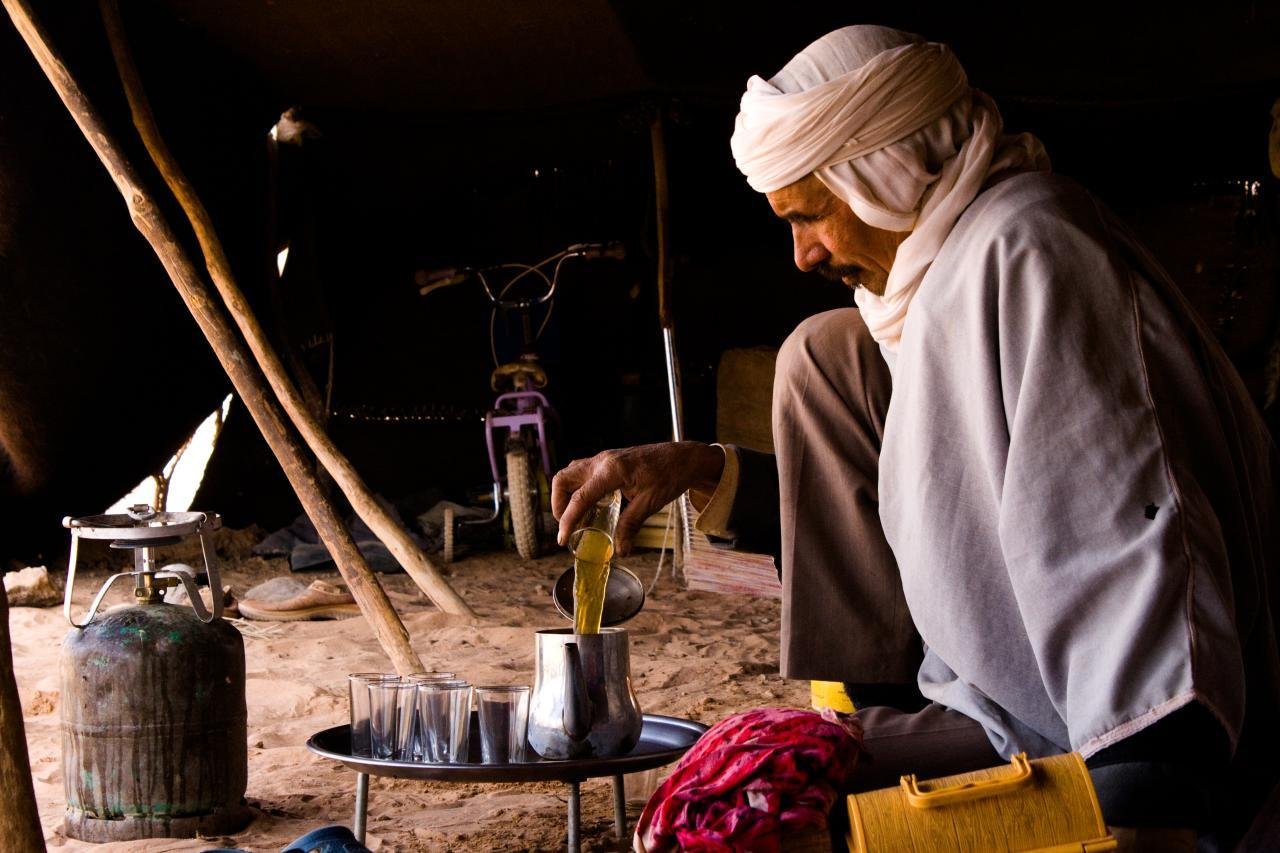
- Tea breaks in quiet places with panoramic views
- Sunset light over the wild dunes of Erg Chigaga
- Traditional desert meals cooked by your local team
- Overnight in a small eco-style camp or wild bivouac (depending on the route)
- Peaceful mornings with sunrise and fresh desert air
Best Time for a Sustainable Trek in Erg Chigaga
The best seasons for sustainable Sahara trekking are usually autumn, winter, and spring, when the temperatures are more comfortable for walking. Summer can be extremely hot, so trekking routes may be limited or adjusted for safety.
How to Trek Responsibly in the Sahara
If you want your Wild Erg Chigaga adventure to be truly sustainable, these small choices make a big difference:
- Bring a reusable water bottle and avoid single-use plastic
- Pack lightweight, practical gear (less waste, less impact)
- Respect silence, wildlife, and local traditions
- Choose a local team that works ethically and pays fairly
- Stay on traditional routes when possible
Who Is Erg Chigaga Trekking For?
Erg Chigaga trekking is ideal for travelers who love nature, photography, and meaningful experiences. You don’t need to be an athlete, but you should enjoy walking and slow travel. Routes can be customized for different fitness levels — from gentle walks to deeper multi-day desert crossings.
FAQ – Nomadic Paths & Wild Dunes (Erg Chigaga Trekking)
Is Erg Chigaga trekking safe?
Yes, when you trek with experienced local guides and a proper support team. Routes and pace are adapted to the season,
weather, and your comfort level.
What’s the difference between Erg Chigaga and other Sahara dunes?
Wild Erg Chigaga is more remote and less crowded. The dunes feel bigger, the landscapes are wilder,
and the experience is closer to real nomadic Sahara travel.
How many days do I need for sustainable Sahara trekking in Erg Chigaga?
Many travelers choose 2 to 5 days depending on how deep they want to go. Longer treks allow a slower pace and a more
immersive experience on true nomadic routes.
Do I sleep in a desert camp or under the stars?
Both are possible. Some nights can be in a small eco-style camp, while other nights can be a wild bivouac under the
stars — depending on your route and comfort preference.
What should I pack for Erg Chigaga trekking?
Comfortable walking shoes, layers for cool evenings, sun protection (hat, sunscreen), a reusable bottle, and a small
daypack. Your team usually provides meals and sleeping arrangements based on the trek style.
Is this trek eco-friendly?
A trek becomes eco-friendly when it’s run responsibly: local teams, minimal waste, respect for nature, and fair
community support. That’s the goal of sustainable Sahara trekking.
Ready for Nomadic Paths & Wild Dunes?
If you want a private, authentic, and sustainable Sahara trekking experience, our
Erg Chigaga trekking routes are designed around comfort, safety, and real desert connection. Tell us
your travel dates, walking level, and the style you prefer — and we’ll create a tailor-made trek into
Wild Erg Chigaga.
Contact us to plan your private Erg Chigaga trekking adventure and walk the Sahara with respect.
STAY IN THE LOOP
Subscribe to our free newsletter.
Leave A Comment
Tea with Nomads: What This Simple Moment Really Means In the vast silence of the Moroccan desert, far from the noise of cities and the rhythm of modern life, there is a moment that travelers rarely forget: sharing a simple glass of tea with nomads. It may seem like a small gesture, almost insignificant at